Brookings: The Spice Club Stumbles Into a Physics Paper
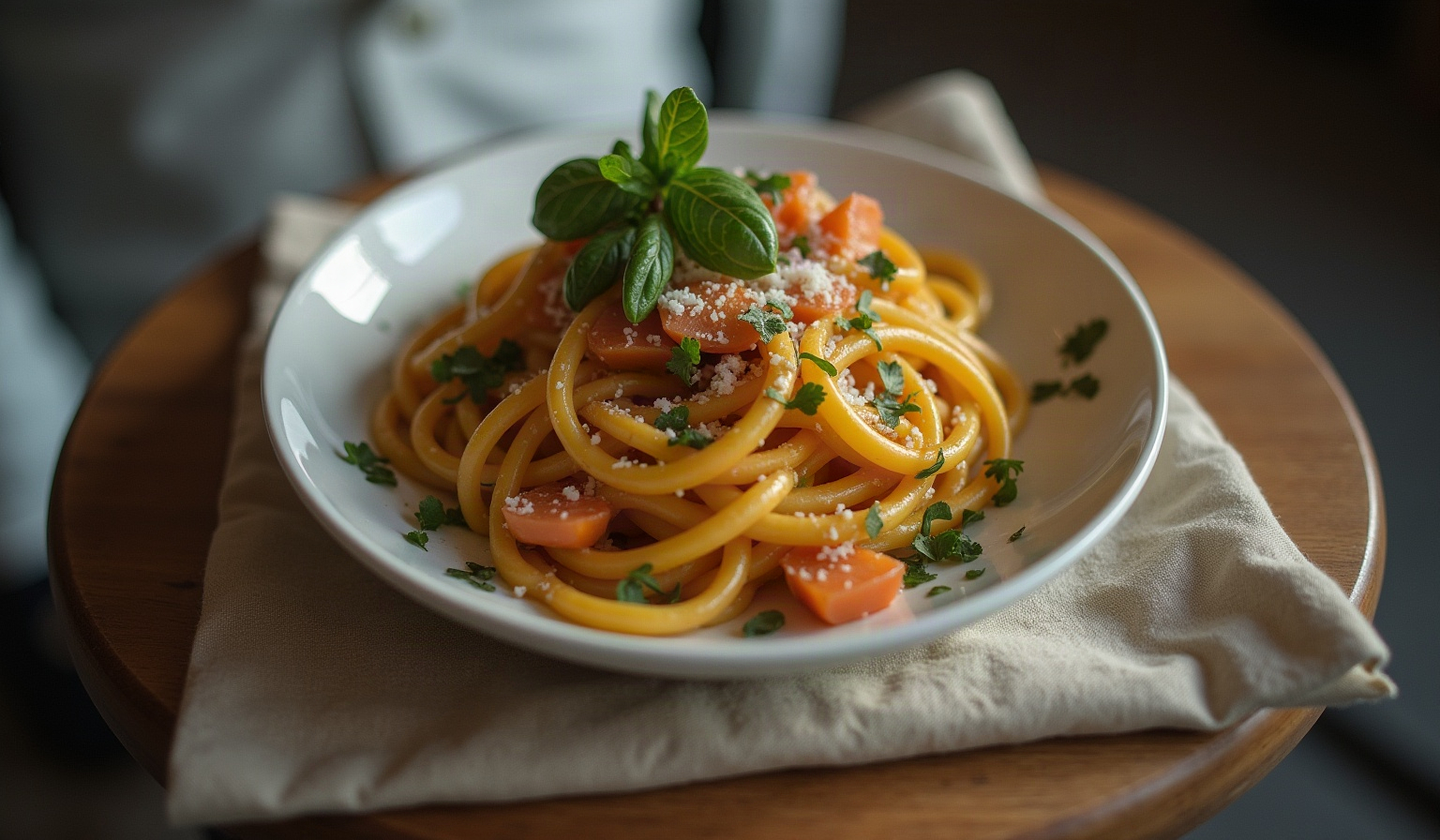
Twice this week, in a meeting room that probably smells more like a kitchen than a laboratory, the Brookings Spice Club will gather to cook cacio e pepe: a Roman pasta dish built from exactly three ingredients that matter, pasta, black pepper, and pecorino cheese, plus the hot water the pasta cooked in. It sounds almost insultingly simple. It is also, as it turns out, a genuine physics problem that took scientists years to solve properly.
Start with the pepper itself, since that is the club's stated theme. Black pepper's bite comes from a compound called piperine, which is chemically unrelated to the capsaicin in chili peppers but manages to trip the same alarm. Both molecules activate a receptor called TRPV1, a protein embedded in nerve endings that normally exists to warn the body about actual heat, contact with something around 109 degrees Fahrenheit or hotter. Piperine fools that receptor into firing without any real thermal danger present. The tongue reports a burn. The brain, reasonably, believes it. That a plant would evolve a seed coating that hijacks a mammal's heat-detection system, presumably to discourage being eaten before the seed can travel somewhere useful, is one of those small, satisfying reminders that spice racks are full of low-grade chemical warfare dressed up as flavor.
Cacio e pepe's real trouble, though, isn't the pepper. It's the cheese. Ask anyone who has tried the dish at home why it sometimes turns silky and sometimes turns into a rubbery, clumped mess, and you'll get folk wisdom about heat and timing. In 2025, a team of physicists in Italy and Spain decided folk wisdom wasn't good enough and ran the dish through the kind of analysis usually reserved for materials science. What they found is that cacio e pepe is, technically, a phase transition problem, the same category of event as water turning to ice, just with dairy proteins instead of water molecules.
Pecorino cheese is full of proteins that unfold, or denature, when they hit heat. Unfolded proteins are sticky and eager to bond with their neighbors. In a stable sauce, starch molecules from the pasta water get in between those proteins like packing material, keeping them separated and evenly suspended so the sauce stays smooth. But if there isn't enough starch in the mix, or if the cheese gets too much direct heat too fast, the proteins clump together into gritty lumps instead, the culinary equivalent of curdling. The researchers found a fairly precise threshold: below roughly 2 to 3 percent starch content in the water-cheese mixture, sauces reliably failed. Above it, they reliably held together. That's not a chef's intuition, that's a phase boundary, plotted on a graph, the kind of thing you'd expect to see describing when a metal alloy stays solid versus turns brittle.
It's worth being honest about how solid this finding is. It's one peer-reviewed paper, from a small team, using a home-kitchen dish as an accessible way to study a broader class of protein-based phase separation, the sort of physics that also shows up in industrial food processing and even in some biological systems where proteins clump inside cells. It's clever and it's real science, but it's a first pass, not a settled law of the universe. Nobody should mistake one paper's starch percentage for gospel.
What makes it worth mentioning in Brookings this particular week is the accident of timing. The Spice Club members stirring a pot on Monday or Tuesday evening are, whether they know it or not, running a small home experiment in exactly the phenomenon that physicists spent real grant money studying: watch the starch, watch the heat, watch the moment order tips into clumping disorder. Most science communication tries to make the abstract feel concrete. This is the rare case where the concrete, a pot of pasta water, already contains the abstract, if anyone bothers to look at it that way. The club members almost certainly won't be checking percentages with a hydrometer. But the dish in front of them is quietly obeying the same rules that decide whether a protein solution stays smooth or falls apart, rules with a name and a graph and, as of this year, a research paper to back them up.