Two Ways to Hold a Paintbrush
Something quietly contradictory is happening in Brookings this month, and it has nothing to do with politics or harvest or the usual seasonal churn. It has to do with what the town is willing to call art, and what it expects you to pay for.
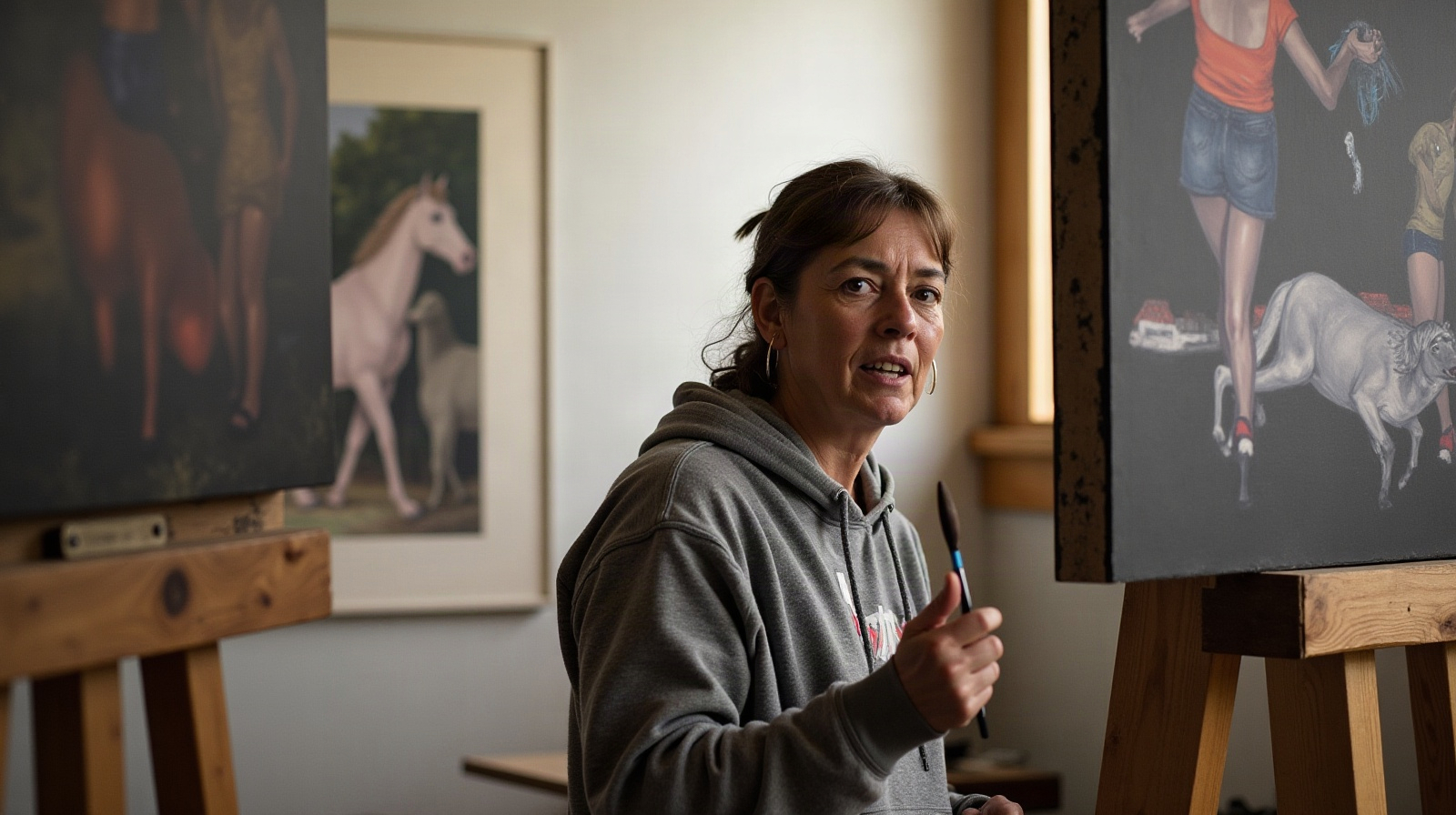
On one side stands Community Art Day, a free, all-ages event where a visiting artist and the Brookings Council will lead residents through collaged construction-paper portraits. All materials provided. No experience needed. The premise, gentle as it sounds, carries a real argument inside it: that making is a universal human capacity, that anyone who shows up with two hands and an afternoon can produce something worth calling art, and that the result is valuable regardless of skill. On the other side, not far away in either time or geography, sits the Uptown Girls Craft Show, now in its eleventh year, where twenty-seven booths of local artisans will sell handmade goods under the sponsorship of the General Federation of Women's Clubs Brookings chapter, with Mission Coffeehouse providing lunch for the browsing crowd. Here the premise is nearly the opposite: that craft is earned, that it takes years to be good enough at something to sell it, and that the proper response to skill is not participation but purchase.
These two events will likely draw overlapping audiences and will probably feel, from the outside, like variations on the same wholesome civic theme: a small town enjoying its own creativity. But they are not the same theme. They represent two competing, barely reconciled ideas about what art is for, and Brookings is unusual only in how openly it hosts both within the same few weeks without apparently noticing the tension.
Community Art Day belongs to a now-familiar civic genre, the democratized art event, in which the point is not the object produced but the experience of producing it. This is participatory art in the therapeutic sense that has spread through American civic life over the past two decades: the paint-and-sip night, the community mural, the collaborative mosaic outside the library. Its values are inclusion, accessibility, and a kind of leveling insistence that creativity does not belong to the talented. There is something genuinely democratic in this, and something genuinely American in it too, going back to the WPA murals and further still to a Jeffersonian suspicion of hierarchies of taste. But it also quietly empties out the category of skill. If everyone's collage is equally art, the word stops doing much work.
The Uptown Girls Craft Show operates on the opposite assumption, and it is worth noticing how much institutional weight stands behind it. The General Federation of Women's Clubs is not a casual organizing committee; it is a national network founded in 1890, built originally around the idea that women's domestic and artisanal labor, excluded from the official economies of the time, deserved organized civic standing. A craft show sponsored by a GFWC chapter is not simply a market, it is the great-granddaughter of a deliberate historical argument that handwork by women has economic and cultural value equal to anything produced in a factory or a boardroom. Eleven years of continuity in Brookings means the show has outlasted several economic cycles and at least one pandemic interruption nationally for events like it, which suggests it answers a need that free, drop-in creativity sessions do not: the need to see skill recognized with a price tag, not just a pat on the back.
It would be easy to dismiss the contrast as trivial, two unrelated items on a community calendar, one for kids and casual hobbyists, one for serious crafters. But the choice a town makes between these models, over and over, in small increments, shapes what its culture actually rewards. A community that only ever hosts free participatory events, however well-intentioned, risks teaching itself that the output of creative labor has no market value, that art is something you do for an afternoon and then set down. A community that only ever hosts curated craft markets risks narrowing creativity to those who already have the training, time, and confidence to sell. Brookings, by holding both within weeks of each other, is at least being honest about the fact that it has not resolved this question, and perhaps does not need to.
What the town might usefully notice is which model gets municipal backing, which gets volunteer labor from an organization with a hundred-and-thirty-year institutional memory, and which gets framed as entertainment versus which gets framed as commerce. The collage table and the craft booth are both, in their own register, teaching Brookings what to expect from the people who make things here. It would be worth asking, the next time a city budget line or a grant application mentions “the arts,” which of these two models it actually means.