The Race That Makes You Earn the View
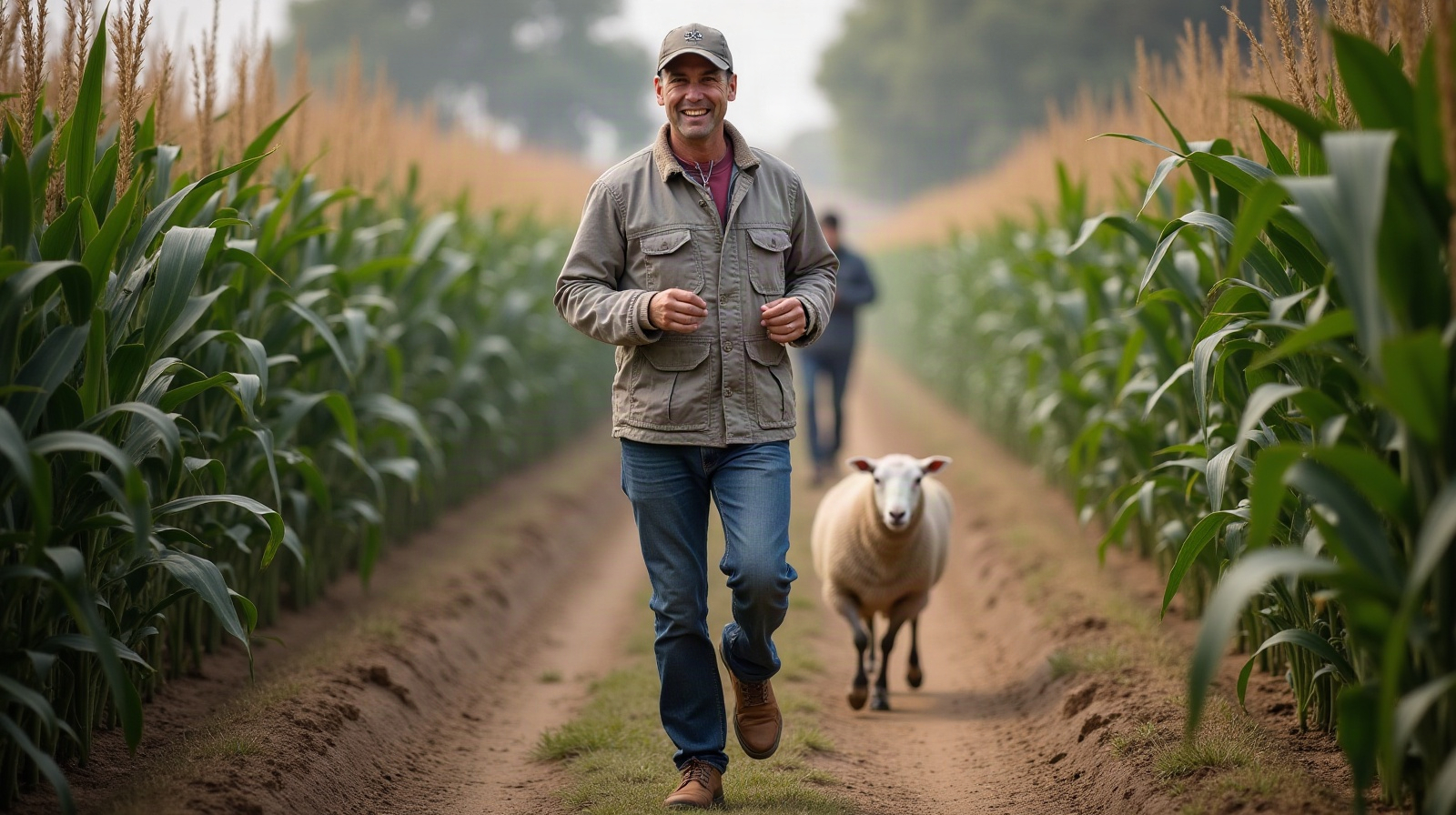
On October 4, several hundred people will lace up running shoes and spend the better part of an hour moving through a dairy barn, a cornfield, and a sheep pasture on the SDSU campus. The event is called Farm to Finish Line, a 3 to 4 mile cross country race organized by the College of Agriculture, Food and Environmental Sciences, and it ends, fittingly, with a breakfast where the animals that shared the course become the animals on the plate. Ribbons go to everyone who finishes. Champion ribbons go to the top two in each age bracket, from 14 and under to 60 and over. It reads, on the surface, like a wholesome autumn fun run with a farm theme bolted on for flavor.
But look at where the course actually goes, and the event stops being incidental. It routes runners through working production facilities: a dairy barn where cows are milked, a pasture where sheep graze, a cornfield mid-harvest-season. These are not backdrops. They are the parts of agriculture that the industry, as a matter of practice and sometimes law, has spent the last two decades trying to keep out of public view.
South Dakota knows this tension better than most states, because it tried to legislate it. In 2013, the legislature passed an “ag-gag” law criminalizing undercover recording at agricultural facilities without consent, part of a wave of similar statutes across farm states responding to activist investigations that had embarrassed the industry with footage of confinement conditions and animal treatment. The Animal Legal Defense Fund and the ACLU sued. In 2019, a federal court struck the law down as an unconstitutional restriction on speech. The episode left behind an unresolved question that has never really gone away: who gets to see how food gets made, and under what conditions?
Farm to Finish Line does not answer that question so much as sidestep it by inverting the terms entirely. Instead of restricting access, it sells tickets to it. Instead of treating the sight lines into a barn as a liability to be managed, it makes them the whole point of showing up on a Saturday morning. The uneven terrain, the grass paths, the fact that a runner has to physically move through a cornfield rather than glimpse it from a highway, all of that converts observation into labor. You don't get to see the dairy operation from a bus window. You get there on foot, breathing hard, and the barn floor under your shoes is the same floor the cows stand on every day of the year, not a cleaned-up version staged for visitors.
That distinction matters more than it might seem. Most agricultural tourism, county fairs, farm-to-table dinners, the various “ag literacy” field trips that Midwestern schoolchildren take every fall, still preserves a certain distance between visitor and operation. Someone curates what you see. A guide narrates. The farm performs itself for the audience. What makes a race different is that nobody can fully stage a cross country course. The route doesn't pause for you. The sheep don't rearrange themselves. Whatever exhaustion and discomfort the runner feels in mile two is not part of the show, it's just what happens when a body moves through working land at speed, and that friction is a kind of honesty a guided tour cannot manufacture.
The age brackets are worth lingering on too. A field that includes competitors 14 and under alongside a 60-plus division is not built around athletic seriousness (this is not a sanctioned distance for competitive cross country) but around generational continuity. The College of Ag is not just producing a Saturday event, it is recruiting future literacy: the eight-year-old finishing a ribbon race through a sheep pasture today is the adult who, twenty years from now, will vote on ballot measures about livestock regulations, or decide what to believe about a viral video from a facility three states away. Breakfast on the Farm afterward, with its equipment demonstrations and animal encounters, functions less as a reward for finishing and more as the second half of the pedagogical argument: here is where the effort you just spent turns into food, watch the whole chain, not just the part that's easy to watch.
None of this resolves the larger, ongoing argument about transparency in industrial agriculture, an argument that involves confinement operations far larger and far less willing to open their doors than a university teaching dairy. But it does suggest a local answer to a national anxiety. If the instinct of the last generation of agricultural policy was to control who gets to look, the instinct on display at SDSU this month is closer to a dare: come look, but you'll have to run for it. In a state that once tried to make looking illegal, that reversal is worth noticing, even if most of the runners crossing the finish line are thinking about breakfast, not jurisprudence.