The Ghost Wears Two Faces, and the Library Lets You Choose
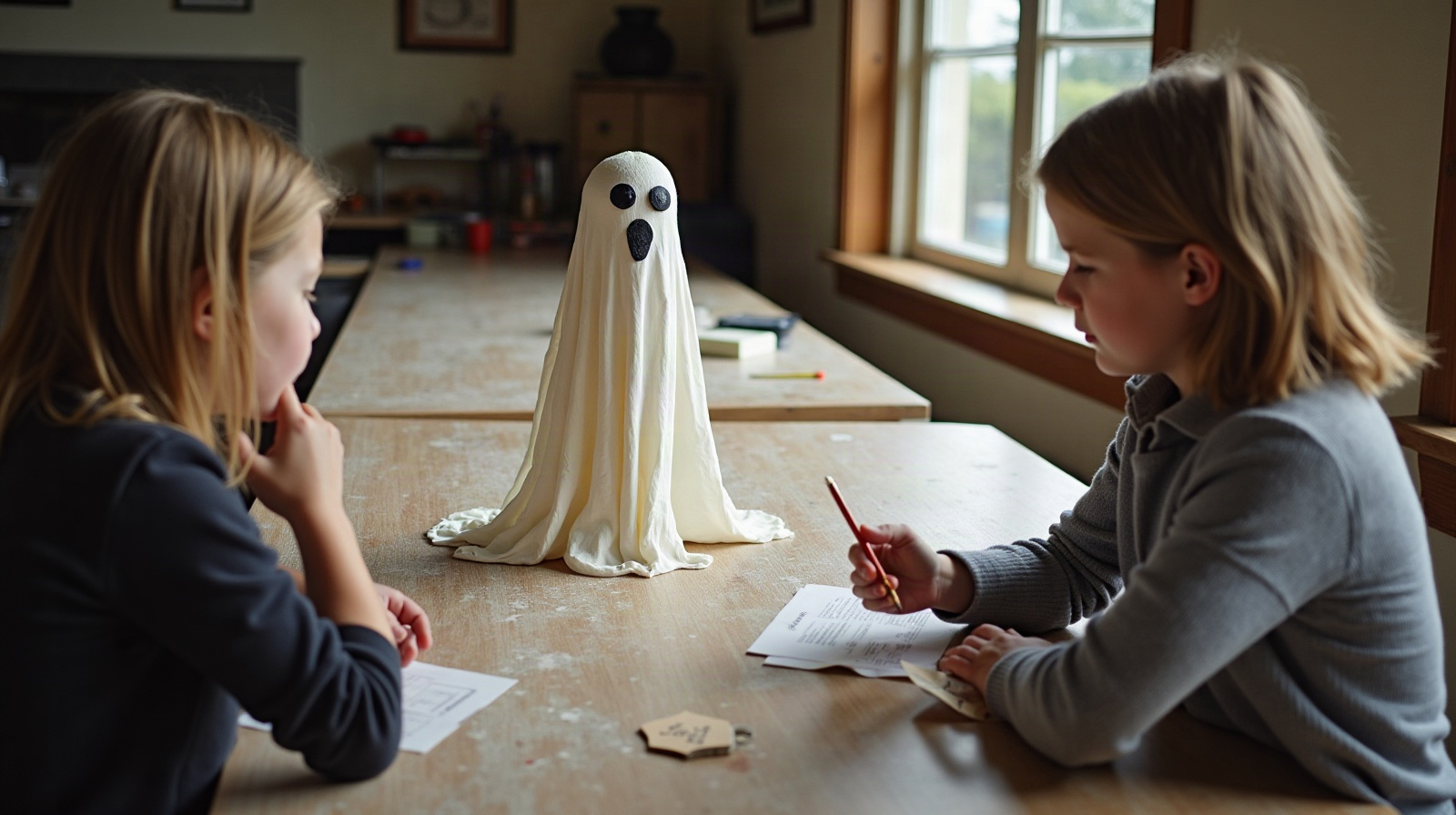
On September 24, the Brookings Public Library will open registration for a workshop that sounds, on its surface, like the gentlest kind of seasonal filler: paint a wooden ghost, take it home, feel briefly good about October. Participants will spend two evening sessions, Wednesday into Thursday, assembling a shape cut by the library's laser cutter. Before any of that happens, though, they will make one small decision that says more about the institution hosting them than anything else on the fall calendar. They will choose whether their ghost is shaped like a book or shaped like a pumpkin.
It's a throwaway detail, the kind of thing a program coordinator settles in five minutes while designing a craft template. But throwaway details are where institutions reveal what they think they're for, and this one is unusually clean. A library that still understood itself narrowly, as a room where books are checked out, would not need to offer an alternative. It could hand every patron a ghost shaped like an open book and call it branding. Instead it is letting people opt out of the book entirely, in favor of a pumpkin, in favor of the harvest, the county fair, the season as agricultural fact rather than literary metaphor. The workshop doesn't resolve the tension between those two identities. It just hands it to the patron as a design choice, laser-cut and ready to paint.
That tension is the real subject here, and it's bigger than one craft night. Public libraries in small Midwestern towns have spent the last decade quietly becoming something other than what their buildings still look like from the outside. They circulate seed libraries and cake pans. They run 3D printers. Brookings' own laser cutter, sitting in a building that presumably still shelves Faulkner in the fiction section, is part of that drift: an expensive piece of fabrication equipment, the kind of tool that used to live exclusively in university engineering labs or small manufacturing shops, now available to anyone willing to sign up for a Wednesday-Thursday evening slot and pick a ghost template. This is not a marginal move. It is a bet about what a library is actually for in a town like this one, wedged between a land-grant university's research infrastructure and a farm economy that runs on machinery, not metaphor.
Brookings is an unusually good place to watch that bet play out, because the town already lives inside the exact duality the workshop is offering as a design choice. It is a college town organized around a research institution that produces papers and degrees, the “book” side of the ledger, and it is also a county seat surrounded by soybean and corn ground and dairy operations, the “pumpkin” side, the harvest-and-hands economy that the university's own agricultural college exists to serve. Most civic institutions in Brookings pick a side and stay there. The library, this week, is refusing to. It's telling patrons: here is a piece of advanced fabrication technology, normally the province of one culture in this town, and we are going to let you use it to make an object that belongs, if you want it to, entirely to the other culture.
There's a reading of this that makes it sound like nothing, just a library trying to get bodies in the door before Halloween candy displaces its programming calendar. That reading isn't wrong, exactly, but it undersells what's happening underneath the marketing. Libraries that survive the next twenty years in towns this size will do it by being the one civic space that doesn't ask people to declare an identity before they walk in. The Yule Market up the road at the art museum sorts its audience by taste. The council chamber sorts by who shows up at 7 p.m. and stays. The library, at its best, sorts by nothing. It hands out the same laser-cut ghost silhouette to the ag student and the English major and lets the paint they choose, and the template shape they pick, do whatever identity work needs doing. The technology is identical either way. The politics of the object are entirely up to the person holding the brush.
It would be easy to overstate the stakes of a Halloween craft night, and this essay has no intention of pretending a wooden ghost is a referendum on rural civic life. But institutions telegraph their theory of themselves in exactly this kind of low-stakes moment, precisely because nobody is watching closely enough to demand consistency. A library that offers both options, book and pumpkin, without ranking them, without even really explaining why, is quietly telling Brookings that it hasn't chosen a side in the town's oldest internal argument. That refusal, more than the laser cutter itself, is the interesting machine here.