The Town Keeps a Junk Drawer, and Once a Year It Lets You Look
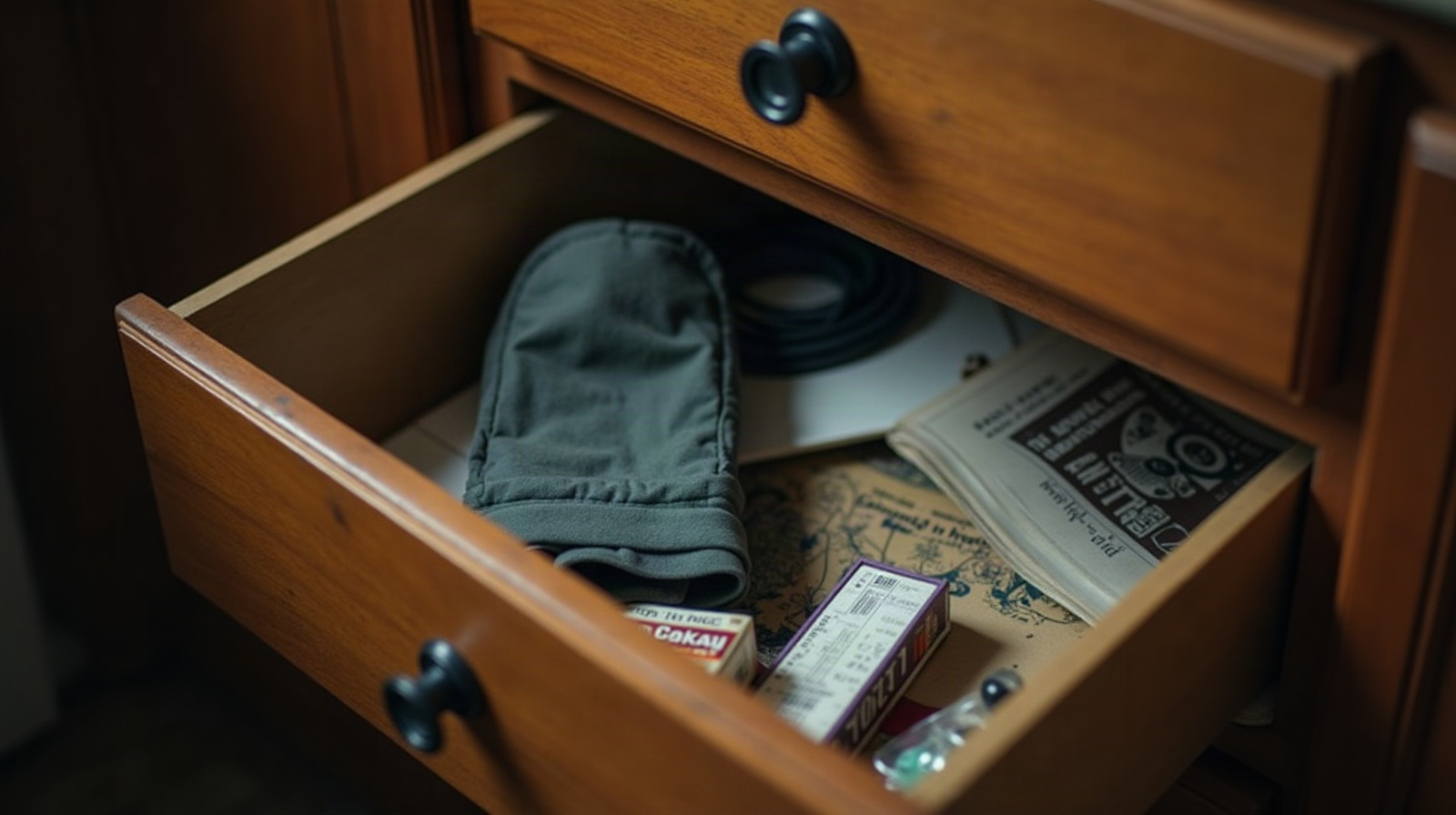
Every household has one, the drawer that will not close all the way, the one holding three dead batteries, a single mitten, a manual for an appliance that died during the Clinton administration, and a rubber band ball that has achieved something close to sentience. Brookings, it turns out, has one too. It is larger than a drawer. It is, in fact, an entire building, and this month you are invited to open it.
The Collections Storage Open House lets visitors wander self-guided through the building where the Agricultural Heritage Museum keeps everything that didn't make the cut for public display, with a staff member standing by for questions, presumably questions like “why do we have four of these” and “what, precisely, is this.” The main museum will also be open that morning, which means guests get the rare privilege of comparing the story a town tells about itself with the much larger, messier pile of evidence it keeps in the back just in case.
This is worth sitting with for a moment, because museums are usually understood as places that show you things, when really their more interesting function is deciding what not to show you. A museum floor is a sentence. A collections storage building is the entire rough draft, crossed-out clauses and all. What ends up on display has been through editing: labeled, lit, arranged into a narrative about plows or pioneers or the slow mechanization of the prairie. What sits in storage is the raw material before anyone imposed a plot on it, thousands of objects that were each, at some point, somebody's best guess about what the future would want to know about the present.
That guess is usually wrong, which is the quietly moving part. Nobody donates an object to a museum thinking “this seems unimportant.” Every artifact back there arrived because someone believed it mattered enough to save, and most of it will likely never be important enough to display. It sits in the dark being correct about almost nothing except its own persistence. There is something almost tender about a building whose entire job is to hold onto things everyone privately suspects are extra.
And yet extra is exactly the point. A town's actual character isn't in the three artifacts chosen to represent “early Brookings agriculture” on a placard. It is in the fact that whoever ran this county kept far more than they needed to, on the off chance that a future historian, or a bored fourth grader on a field trip, would want the thing that seemed unnecessary in 1974. Storage is optimism with humidity control.
There is also a small local joke buried in the timing, which is that this open house runs the same season as the Historic Preservation Commission quietly deciding, case by case, which houses on Harvey Dunn Street and 4th Street count as history worth protecting. One arm of the town is out there deciding what counts as heritage on the land. Another arm is in a warehouse holding onto the parts nobody has decided about yet. Between the two, Brookings has built itself a fairly complete argument about how a place remembers itself: officially, through ordinances and awards and subcommittees, and unofficially, through a very large room of stuff someone once could not bring themselves to throw away.
Visitors who go expecting a tidy second museum will instead get something closer to a town's subconscious, an inventory of things it wasn't ready to interpret yet. That is, in its own dusty way, a kind of honesty rarer than any exhibit label. The front room tells you what Brookings has decided to say about itself. The storage building tells you everything it hasn't gotten around to deciding yet, which, when you think about most people you know, is usually the more accurate biography anyway.
So go look at the drawer. Ask the staff member what the odd one is for. There is a good chance not even they fully know, and that not-knowing, held carefully on a shelf, is itself a kind of civic virtue.