The Invisible Field Next Door
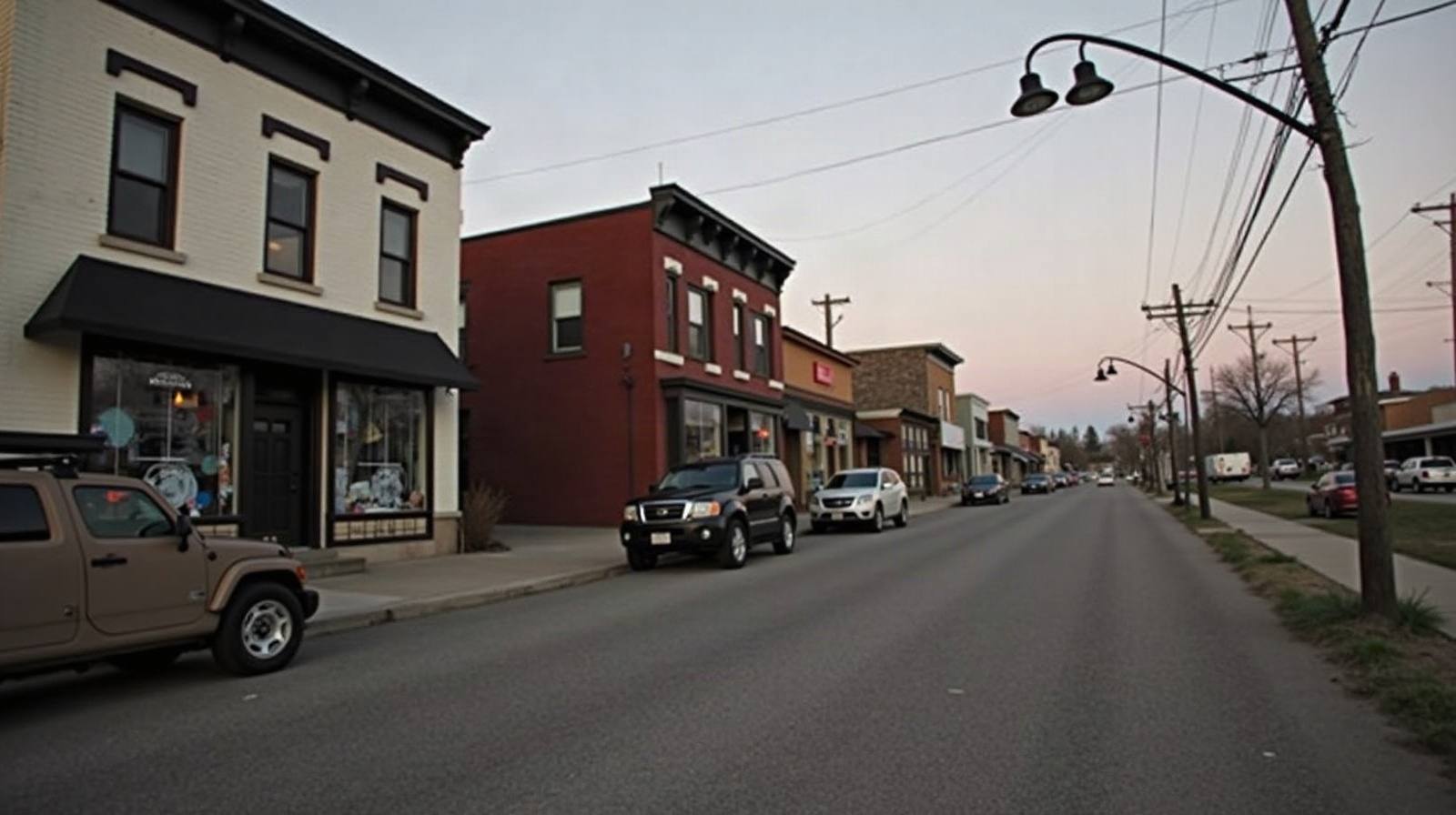
Later this month, Brookings County's 765kV Transmission Line Advisory Committee will do something most public meetings don't: spend an evening on physics. Xcel Energy has been invited to walk through the engineering and health considerations of running a 765,000-volt line through the county, and the committee will weigh whether to send a recommendation on to the Planning Commission. Buried in that agenda item is a genuinely interesting scientific question that outlives any single project: what does it actually mean to live near a high-voltage line, and what do we know about whether it matters?
Start with the number itself. A standard household outlet delivers about 120 volts. A 765kV transmission line carries roughly 6,000 times that. But voltage alone doesn't tell you what's happening in the air around the wires. Two separate things radiate outward from any power line: an electric field, created by the voltage, and a magnetic field, created by the current actually flowing through the wire. They behave differently, and conflating them is where a lot of public confusion starts.
The electric field is strongest directly under the line and falls off quickly as you move away, the way a loud speaker is deafening up close and merely background noise across a parking lot. Utilities can shield against it fairly effectively; a tree line, a fence, even the distance of a reasonable setback does a lot of the work. Measured in kilovolts per meter, it is highest right beneath the conductors and drops sharply within a few hundred feet.
The magnetic field is the trickier character. It depends not on voltage but on current, meaning it can be stronger on a hot summer afternoon when the grid is straining to keep air conditioners running, and weaker at 3 a.m. when demand is low. It is measured in milligauss, a unit so small that a running hair dryer held a few inches from your head produces several hundred of them, while standing fifty feet from a major transmission line typically produces single digits. Unlike the electric field, it is much harder to shield; walls and trees barely slow it down, which is part of why it has drawn the most scientific attention over the decades.
That attention has a real history. In 1979, a study out of Denver suggested a statistical link between proximity to power lines and childhood leukemia, and the finding rattled around public health circles for years. Follow-up research, including large reviews by the World Health Organization and the U.S. National Institute of Environmental Health Sciences, found the picture far murkier than the headlines suggested. In 2002, the International Agency for Research on Cancer classified magnetic fields from power lines as a “possible” carcinogen, a category that, somewhat deflatingly, also includes coffee, aloe vera extract, and pickled vegetables. It's a designation that means the evidence couldn't be ruled out, not that it was confirmed. Decades of follow-up studies have found no clear biological mechanism explaining how these fields, which are far weaker than the ones already crackling through every human nervous system, would damage cells. The scientific consensus, such as it is, remains “unresolved but not alarming,” which is an uncomfortable place for a committee that has to make an actual recommendation.
This is why Xcel Energy's presentation matters less as reassurance or warning and more as context. Engineering considerations, like line height, conductor spacing, and right-of-way width, determine the field strength people actually experience, and those numbers are measurable and public. The health question sits downstream of that engineering, resting on decades of epidemiology that has never quite closed the book either way.
None of this tells Brookings County residents what to think about a specific route or setback distance; that's a judgment for the committee and, eventually, elected officials. But it's worth appreciating that the debate playing out in a county meeting room touches one of the longer-running open questions in environmental health, the kind of thing researchers have been chasing since before most of the county's current farmland was mapped for GPS-guided planting. The wires overhead carry more than electricity. They carry forty-five years of inconclusive data, still waiting for someone to finish the story.