The Odyssey Turns Homer Into Pure Cinema, Even When the Poetry Gets Lost
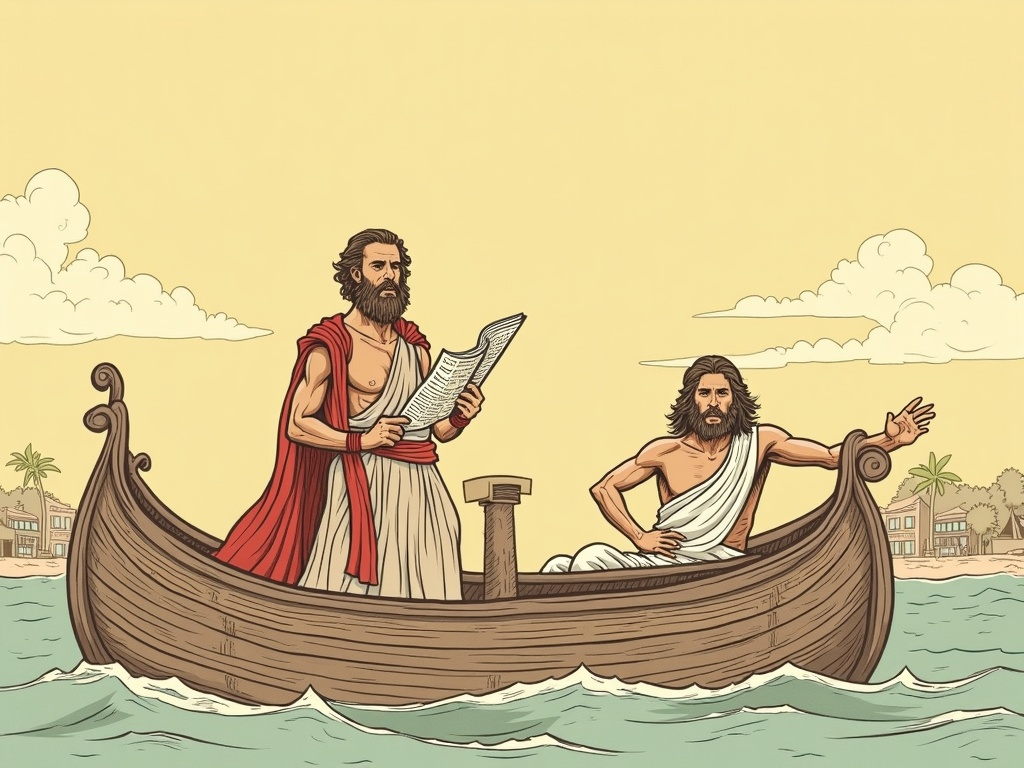
Christopher Nolan has never been shy about scale, but The Odyssey finds him working at a size that even Oppenheimer and Dunkirk didn't quite prepare audiences for. This is a three-hour epic shot largely on IMAX film stock, built around practical sets, real oceans, and a cast of actors who look genuinely exhausted by the elements Nolan threw at them. That exhaustion, as it turns out, is the film's greatest special effect.
Matt Damon plays Odysseus as a man who has stopped believing his own war stories even as he tells them, and it's the smartest choice in the movie. There's none of the swaggering hero-king posture you might expect from a studio epic. Damon plays him gray, hollowed out, quick to anger in ways that feel earned rather than dramatic. Anne Hathaway, as Penelope, gets less screen time than the marketing suggests, but she makes every scene count, particularly a long dialogue sequence midway through the film that plays almost like a stage play, all long takes and unbroken tension.
The rest of the ensemble is where Nolan's ambitions occasionally outrun his script. Tom Holland and Zendaya bring real chemistry to a subplot that deserves its own movie, while Robert Pattinson, cast against type in a role that trades on his gift for controlled menace, nearly steals the film outright in his limited scenes. Lupita Nyong'o and Charlize Theron, playing figures out of Greek myth rendered here with more restraint than spectacle, are given striking introductions that Nolan then doesn't quite know what to do with. Samantha Morton's role is small but haunting, the kind of performance that lingers after the lights come up even though it barely occupies ten minutes of runtime.
Visually, this is Nolan at his most disciplined and most indulgent simultaneously. The ocean sequences, shot for real rather than composited, have a tactile menace that no digital ocean has managed in years. But Nolan's signature nonlinear structure, so effective in Memento and Dunkirk, works against Homer's story here. The Odyssey is fundamentally about a journey home, a line pulled taut by distance and longing. Chopping that line into fragmented flashbacks dilutes the very tension the poem is built on. Audiences unfamiliar with the source material may find themselves reconstructing the plot rather than feeling it.
The score, dense and percussive, pushes hard in moments that might have benefited from silence. Nolan has always trusted sound to do emotional work that his images and editing leave unfinished, and that habit resurfaces here more than in his last few films.
What ultimately saves The Odyssey is Nolan's refusal to modernize the myth into easy commentary. There's no wink at the camera, no contemporary political gloss layered over Homer. It trusts its audience to sit with an ancient story about grief, patience, and the cost of survival, told at a scale few directors would attempt and even fewer could pull off with this much craft.
This isn't Nolan's tightest film, and it isn't his most emotionally direct. But it's a serious, handsomely made attempt at translating one of the oldest stories in Western literature into blockbuster terms, and it mostly succeeds on the strength of its cast and its images rather than its structure. Worth seeing on the biggest screen available this week, and worth a little patience with a story that takes its sweet time getting home.